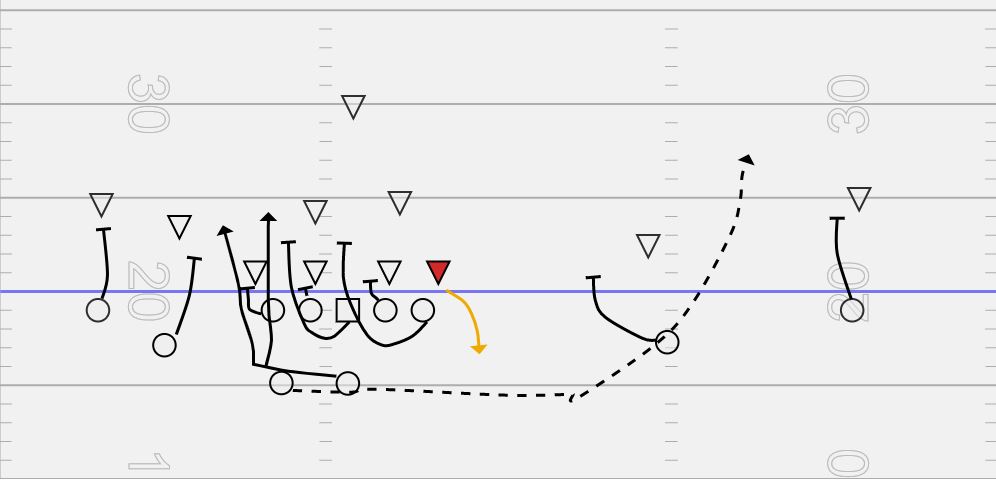
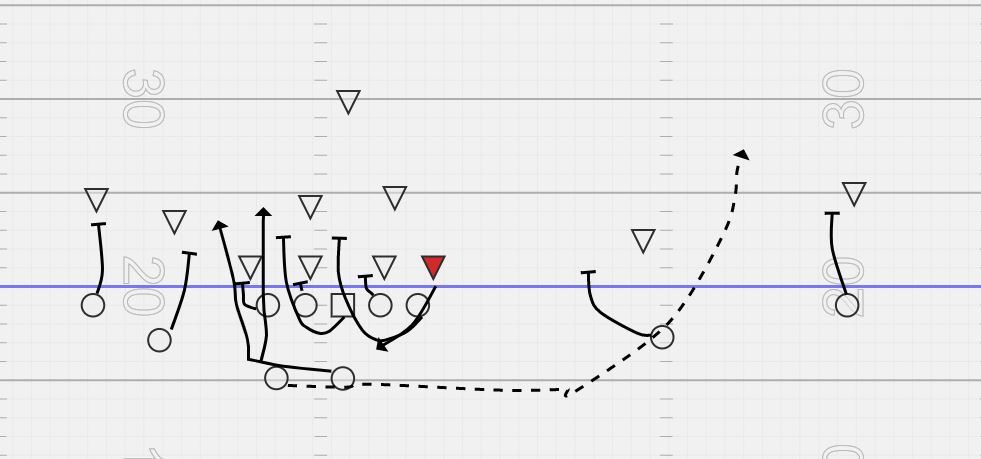
I know, everyone has sent me a message waiting on Part 2 of my Glazier Clinic Notes from Brent Dearmon and they are coming soon..
This past month I haven't had a chance to update the blog, due to my new position as Head Football Coach at a new school. Busy with Spring Football and licking my chops being able to teach the game from the ground up again!
This doesn't mean, we don't have some great updates for you!
If you subscribe to my YouTube Channel you know I have dropped off some exciting videos this last month!
Inside Zone Bash
The hottest article on this site in a while was The Bash Concept posted by John Konecki!
While like him I love the Bash Concept when paired with Counter. Here is an alternative for those of you who are heavy Inside Zone.
Inside Zone Drills, Formations and Film
If you are a member of our Facebook Group No Huddle Tempo Practice you know the question how do you run Inside Zone is asked a TON!
I am a firm believer in as many double teams as possible. But here is a presentation on how to install the Inside Zone.
Variation and Window Dressing the IZ in the Spread
Here is a simple way to add a post-snap pass off of Inside Zone that will give the defense multiple looks! I got this from Joe Osovet and The Bolt Offense
Two Must Read Articles
If you want to become a better offensive coach, I have 2 must read articles that have been recently published!
I had the pleasure of listening to Brent Dearmon at the Atlanta Football Glazier Clinics. He was worth the FULL CLINIC. I fully hope Kansas uses what he knows!
If you know me, you know I am a RPO lover. We ran a lot of RPOs at Newton High School and over the last 8 years starting with my favorite stick-draw to the most used one for me Stick-Zone.
But Brent Dearmon has taken RPO, playcalling, development and understanding to the next level.
In part one, I want to give you what I learned from him to make the Zone game better.....
#1 - That he plays with Field and Boundary Wide Receivers. He plays his best WR to the boundary and that his Field WR is his best blocker
#2 He teaches the H-back to duck walk 3 steps, with eyes on the LB, who is the run fitter, before going on to the safety.
#3 He installs IZ for the 1st 2 days because his team is in Helmets he wants to make sure he gets the base of his offense right.
#4 He spoke about how to use the Zone Read Bubble with 2 RBs 1st
Does your program use them? Should you use them? And if you have the information what do you do with it?
Coach Konecki has talked a lot over the last 2 years about his study of Analytics and how it has helped him prepare and re-think practice.
Coach Perry of Pearl HS, I came across last year and dove off the deep end after hearing him and thinking about the information that Coach Konecki had preached about.
Here are 2 coaches who have played for state titles (multiple) talking about analytics! Maybe I should learn more - both talked about SportSource Analytics . Come listen and learn about Analytics and dive into your off-season study! Here are some of issues and topics we talked about and dove into on the podcast.
Our objectives are a big part of our success! Kids know this is how we are gonna win! We preach them, grade them and reward them! pic.twitter.com/Dw4rdwm4JR
In 2017, the average #FBS team scored points on 45% of possessions when they were efficient (4 or more yards) on P&10. When they weren't efficient (3 yards or less) on P&10, the average team scored points 27% of the time. A dramatic difference based on one play.
— SportSource Analytics (@SportSourceA) March 7, 2019
Note to defensive coaches: At the FBS level, teams score TD's: 9% of drives when one or more sacks is recorded; 15% of drives when one or more negative plays is recorded; 4% of drives without a big play (12+ yard run or 15+ yard pass); & 20% of drives when inefficient on P&10.
— SportSource Analytics (@SportSourceA) March 9, 2018
During Wednesday’s practice, Newton head coach Terrance Banks said that
he knew what he wanted to do regarding his two-man quarterback race, but
wasn’t ready to share it. We found out Friday night as senior LT
Stowers trotted out for the first series of the game, and stayed in
throughout, and what a difference it made, starting with the Rams’ first
series of the game. It was a 77-yard scoring drive that took all of 47
seconds. The pace looked good. His throws were crisp. It looked as if
Newton had been working on the execution of that specific play during
the entire bye week and preparation week.
THIS was the start of an article from a game we played this season, when things started clicking! It wasn't that we had been working on a "specific" play all week, it was that our quarterback in his first full time start finally started to understand HIS options in the RPO game!
XO Clinics all month of February posted a play a day. One of the plays that shared was one of our best RPOs from the past 2 seasons.
We have been able to create explosive plays in our offense by advancing the teaching of our RPOs.
By giving our quarterbacks a pre-snap answer and post-snap answer. Also by attaching quick game tags such as double slants and seam-fin, we have been able to eliminate the need to call quick game or a run play. We are now about to do both, RPOs make up approximately 40% of our offense.
To understand how we got here, let me take you back eight years to the first RPO we used in our offense and still is one of my favorites, go-to plays and crutch.
Stick-Draw, this is what it looked like then.
We still run this play, especially in the 3rd and medium range and if you have a Mobile QB it is great from Empty variations.
From there our RPO Game expanded to what is the #1 ran RPO today, Zone-Stick we still run it and use several variations. Examples are shown here..
I want to share with you a few of our game tested RPOs that you should look at adding to your catalog these plays have really CHANGED and expanded what we do and helped us create more explosive plays plus streamlined our passing package.
John K., John M. and Terrance bring you their first podcast from there blog -- They talk one time they have learned this off-season, where to play your bet Wide Receiver, the Bash concept play, practicing hard with no pads and limiting your number of plays but not formations!
A few years ago I was interested in using a Go Pro camera. Lucky for me I was able to buy a used one for pretty cheap. It definitely is an interesting perspective and can help with Oline play as well. I may have to invest in updated one with remote for easier of editing.
I have been reading and received a number of comments about the bash concept that is currently being employed by offenses across the football landscape. I thought I would take the time to put my thoughts about the play to paper. But before I begin on my explanation of the bash play I think it is important to speak about the zone read.
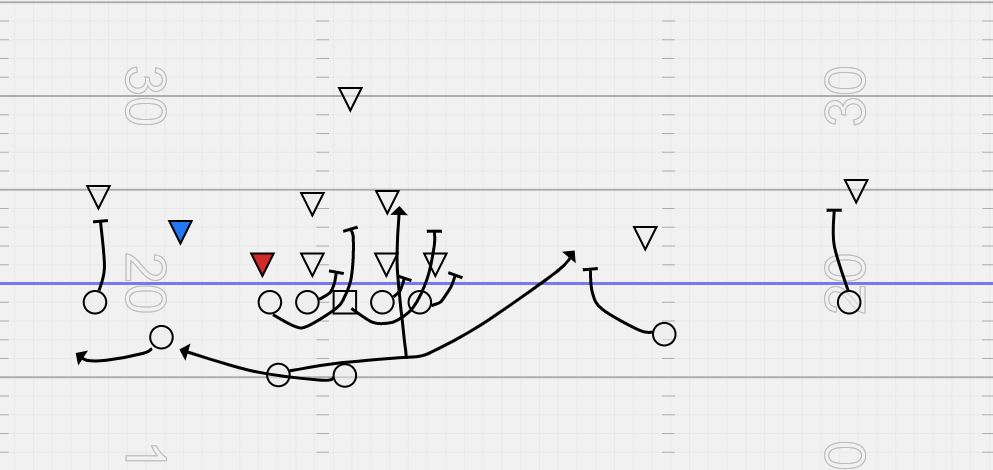
ZONE READ RIGHT
(Figure One)
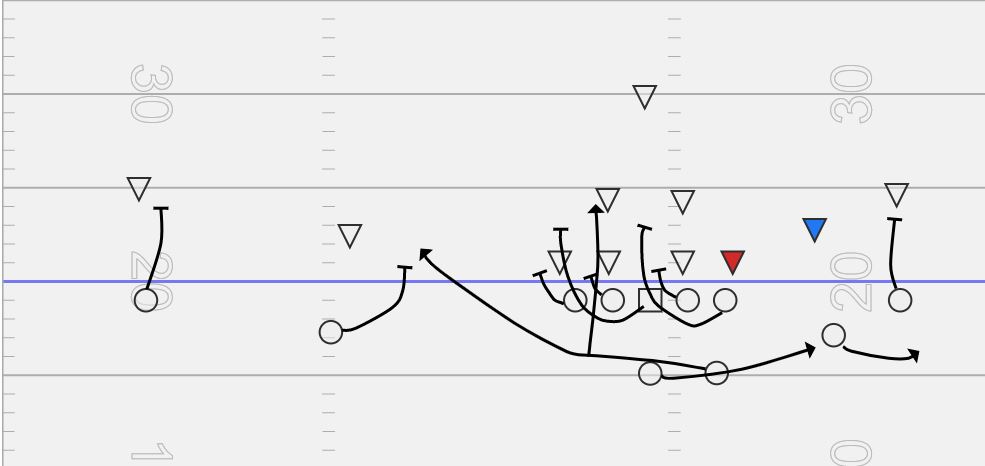
ZONE READ LEFT
(Figure Two)
In both of these examples, you can see diagrams for the outside zone play to the right (Figure One) and the outside zone play to the left (Figure Two) both of these examples call for the uncovered offensive linemen to pull into the first vertical seam they can find along the line of scrimmage (LOS). Please note the red triangle is the presnap read key for the quarterback on the outside zone play. The number two wide receiver on the backside of the run is running a bubble route. (Coaching Point-Make sure you have your backside wide receiver chop their feet in place prior to extending on the bubble)
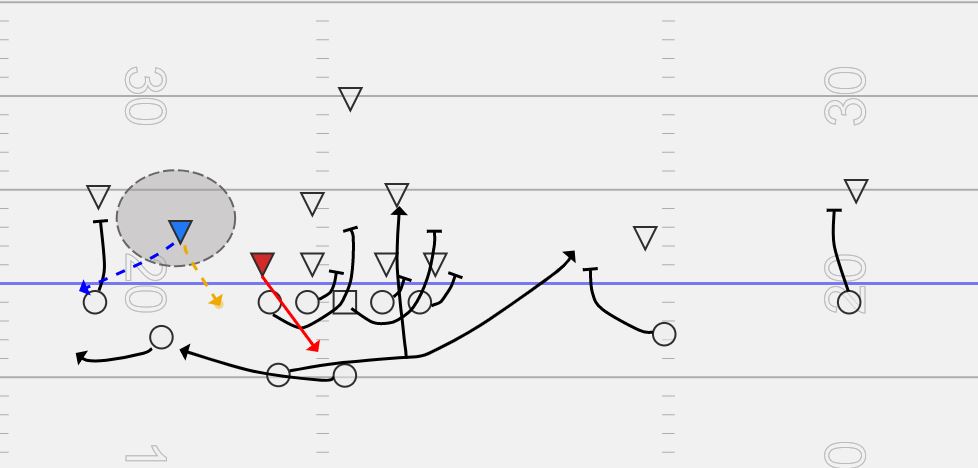
ZONE READ QB PULL LEFT
(Figure Three)
ZONE READ QB PULL RIGHT
(Figure Four)
In both of these examples, you will see the quarterback reading the backside defender. In the two examples (Figure Three and Figure Four) the quarterback reads the backside defender. In both of these examples, the backside defender comes upfield and is on a path to disrupt the outside zone play to the running back. Upon observing the defensive end and his post-snap movement the quarterback pulls the football. Immediately after the quarterback pulls the ball he needs to get his eyes on the defender over the number two wide receiver (blue triangle). If the man over number two attacks the quarterback he throws the ball to the wide receiver who is running the backside bubble. If the man over number expands with the bubble the quarterback puts his foot in the ground and get vertical in the void that has been created by the vacating defender.
As defenses have evolved they have become pretty good at defending the aforementioned zone read play. Obviously the longer you run the zone read play the more iterations of defensive alignment and backside exchanges you will see defenses employ. The four examples above were a brief explanation of how to run the zone read play out of the 2x2 formation. Throughout the rest of this article, we will examine the bash play which is an excellent complement to the zone read play.
There are a number of reasons to run this play but one of the main reasons I employ it into my offense is it does not change the assignments for the offensive line. As you will see in all of the figures in this articles the offensive line is blocking the play the same exact way based upon our outside zone rules. Below you will see an everyday drill we use in our system to teach our offensive linemen to pull on our wide zone play.
BASH PLAY QB KEEP RIGHT
(Figure Five)
BASH PLAY QB KEEP LEFT
(Figure Six)
The primary difference on this play is the quarterback and the running back have switched roles on the outside zone play. The quarterback now will run the outside zone play exactly as the running back runs the play. The quarterback will read the blocks the same way the running back reads the blocks of the offensive linemen. The quarterback’s read key is still the defensive end (red triangle). After the ball has been snapped the quarterback will place the ball out in front of their body to mesh with the running back. It is important to note, that the quarterback’s eyes need to be on the backside defender. It is the running backs responsibility to mesh with the quarterback. In both figures five and six, the quarterback would keep the ball and run the outside zone based upon the post-snap movement of the defensive end.
BASH PLAY QB GIVE (RUNNING BACK LEFT)
(Figure Seven)
(Figure Eight)
As you can see if both figures seven and eight the defensive end (red triangle) crashes down and will disrupt the quarterback outside zone. Therefore, the quarterback will give the ball to the running back as he is crossing his face. Again, it is important to note, that the quarterback will have his eyes on the backside defender (red triangle). After the ball has been given to the running back we generally ask them to get outside the tackle box before they start to work up the field.
In the video clips you will see my team running the bash concept with both the outside zone and counter run game.